The Story — From Molecules to Models
Act I
I started in chemistry — studying molecular dynamics and quantum mechanical methods to understand how molecules behave.
Nine years. Two degrees. Simulating ionic liquids for gas separation and CO₂ capture. Monte Carlo methods, molecular dynamics, quantum mechanical calculations — building computational models that revealed what experiments alone couldn’t see.
That work taught me something that changed everything:
The best science depends on the best software.
Act II
So I built a system that could see what doctors couldn’t.
Point-of-care computational microscopy — automated imaging and analysis of pathology specimens. A machine that looks at cells and tells you what’s wrong.
Two US patents. Technology that went from a lab prototype to a diagnostic tool.
I learned that inventing something and engineering something are two different skills. I wanted both.
Act III
I applied that thinking to aerospace. Mission-critical systems. No room for error.
ML, NLP, and computer vision at The Aerospace Corporation. Processing 12,847 documents at 99.2% accuracy. Building systems where failure means something.
Then CTO at a startup. Senior ML engineer at another. Full stack engineering. Consulting. Four roles in three years — each one pushing deeper into the question of how AI could serve something bigger than a product.
Every system I built made me ask: what if the scientists could build this themselves?
Act IV
Now I build the tools that help scientists ask better questions.
Senior Research Software Engineer at the University of Washington’s Scientific Software Engineering Center. Leading AI and open science projects across biodiversity, medicine, education, and astrophysics. Co-owner of BitBarrel LLC, building AI platforms for research and enterprise.
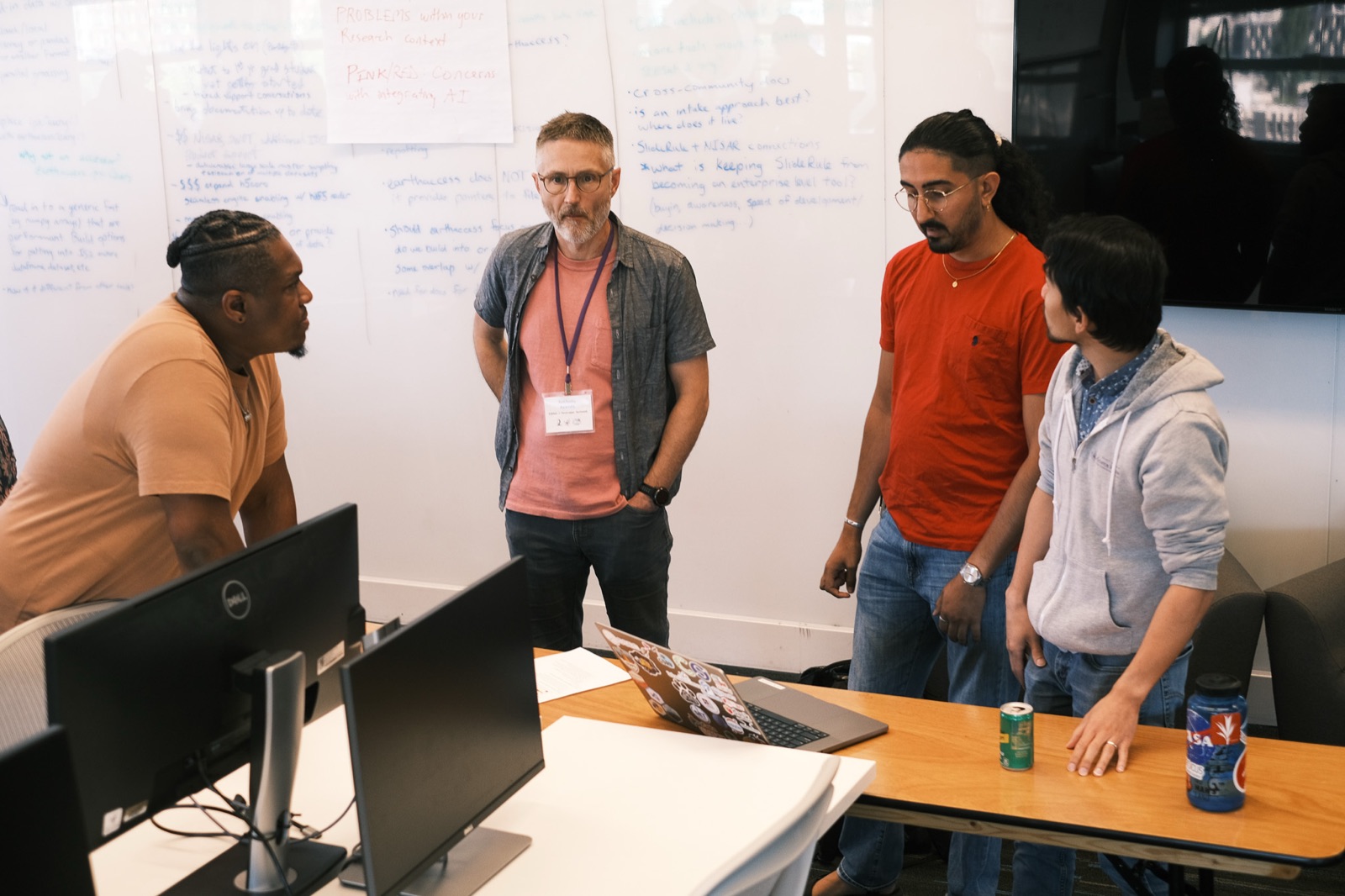
Published in JOSS, eNeuro, and the Journal of Neurophysiology, with work under review at Nature Medicine. Guest lecturer at Cambridge, Johns Hopkins, and SciPy. Member of the US-RSE Steering Committee.
And somewhere along the way, I started writing — making the invisible craft of research software engineering visible. 63 articles. 117K reads. Because the work only matters if people understand it.
From molecules to models. From microscopes to AI agents.