About — Cordero Core
CHAPTER 01 — THE FOUNDATION
The Foundation
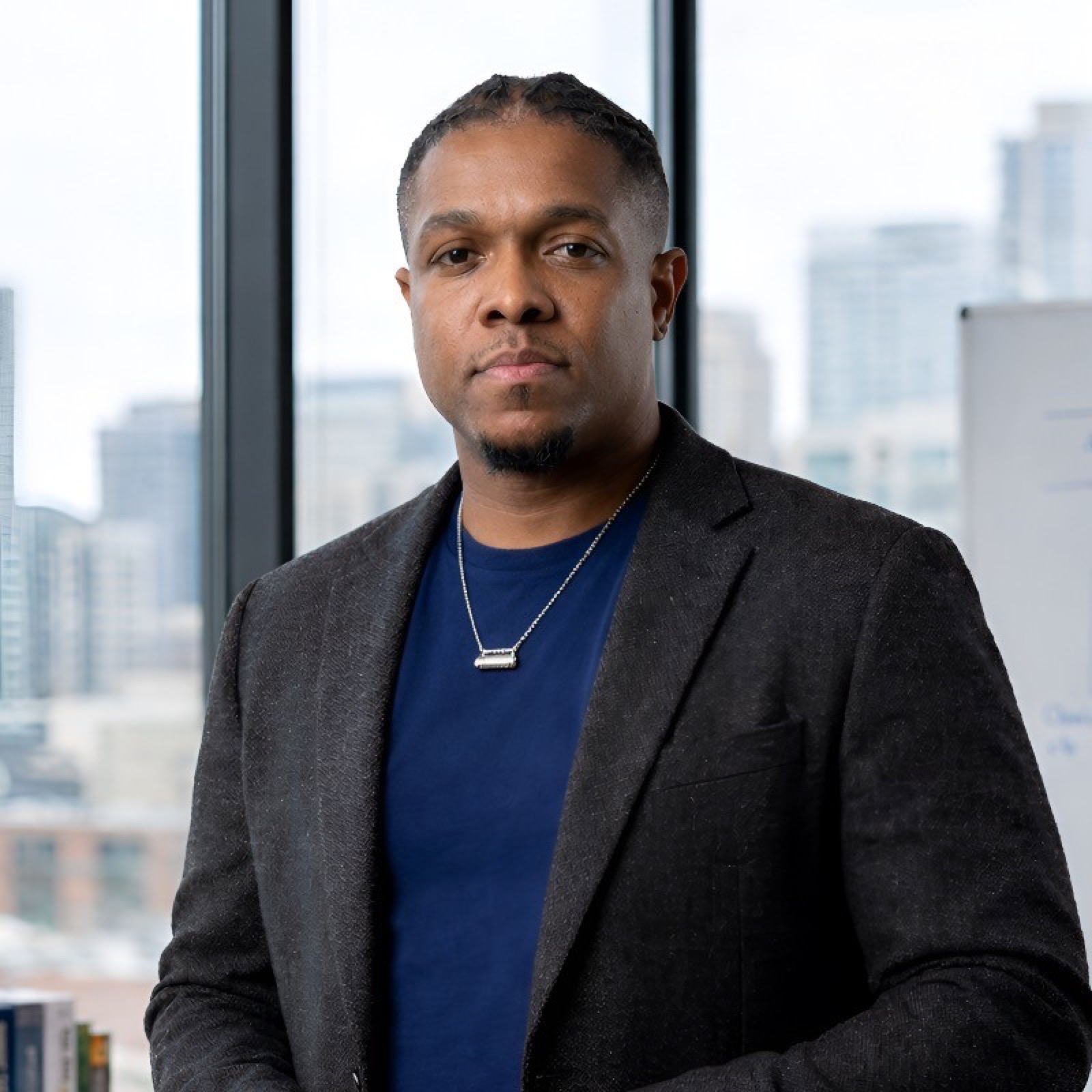
Cordero Core
Senior Research Software Engineer · AI & Open Science
Let me start where it actually starts: Alabama. Private school, then public high school, straight A’s the whole way. None of it came easy. I’d just decided, early, that if I was never the smartest person in the room, I could out-work whoever was. Two, three, four times the hours if that’s what it took. I still run on that. Effort is the great equalizer. It’s the one part of the formula that’s entirely yours.
Where I grew up, the futures anyone could point to were teacher, lawyer, doctor. So: doctor. Chemistry major. Then a required computer science course caught me completely off guard. Ten weeks to build a website; I finished in four. My professor stripped my site for parts and told me to rebuild it, and ten days later it was back, music playing and everything. Nobody pulled me aside and said, you might be a computer scientist. I wish someone had. I kept marching toward medicine.
Teaching found me anyway. In high school I tried helping my girlfriend with chemistry, and halfway through she decided she’d rather just read the book. I carried that for years: I’d be a terrible teacher. Then a tutoring program at UAB proved me wrong. The students my partner and I worked with outperformed every pair on campus. Somewhere in those sessions the doctor plan quietly died. The doctor uses the tools. I wanted to be the one who makes the tools.
The sentence that changed the most came through BMEN, the Black Male Excellence Network. Fonzworth Bentley told a room full of us why he wrote alligator wrestler on his applications. The room laughed; his point was dead serious. When ninety-five percent of applicants look identical on paper, be the one people are still talking about Monday morning. I was a conservative kid from Alabama, raised to stay in my lane, careful, being Black, to never read as too much. Sitting there, I realized I needed to be more outlandish, not less.
So I went looking for my alligators. MMA. Building my own computers after the family Compaq gave out. Cooking, learned off the Food Network, because everything near campus tasted like chicken fingers. Then baking, because great cooks still lose to pastry chefs and I wanted the deeper skill. My first biscuits could have been hockey pucks. I got better.
 Static Shock
Channel 1 of 18: Static Shock. Rewatched it recently. Still holds up.
CHAPTER 02 — THE EVOLUTION
The Evolution
The scientist years were nine of them, across the University of Alabama system. Ionic liquids, CO₂ capture, molecular dynamics. And the tool I remember most isn’t an instrument; it’s GROMACS, a simulation package stitched together from years of individual contributions. It did the science. Working with it was miserable. That’s when I first saw it clearly: there were two kinds of research software. The kind researchers write, which does the science but hurts to use. And the kind engineers write, which is beautiful but never quite does what the science needs. I remember thinking somebody was going to have to stand in that gap.
In 2018 I got into a PhD program at Vanderbilt. I turned it down for a startup called Pathware. When I was honest with myself, the reason I wanted a doctorate was to be in charge of my own work, and Pathware was offering exactly that, plus real stakes and a paycheck. We built computational microscopes that could see what doctors couldn’t, and two patents came out of it. After that I went and tested the engineer in me anywhere the stakes were real: aerospace systems where failure actually costs something, a CTO seat, senior ML roles, my own consulting practice.
Then in January 2023, the University of Washington posted a role that read like a description of the gap I’d been circling since grad school. My reaction was instant: this is me. I’d been preparing for that job for a decade without knowing it would exist. And here’s the part I couldn’t have planned. I walked in the door right as ChatGPT walked into the world, at the start of a complete rethinking of how research software gets made. Now I build AI and open science tools at SSEC, co-own BitBarrel, serve on the US-RSE Steering Committee, and write about the craft, because the work only matters if people understand it.
> cat story.md the long version, in four acts →
02.1 Now
02.2 Career
02.3 Education & Patents
CHAPTER 03 — THE APPROACH
The Approach
The best science depends on the best software.
Everything I do starts with the same instinct: find the pattern, then notice where it breaks. Patterns live in molecules and codebases, and in the way a team talks about its own work. The break is usually where the real problem is hiding, so that’s where I look first, every time, before I touch a keyboard.
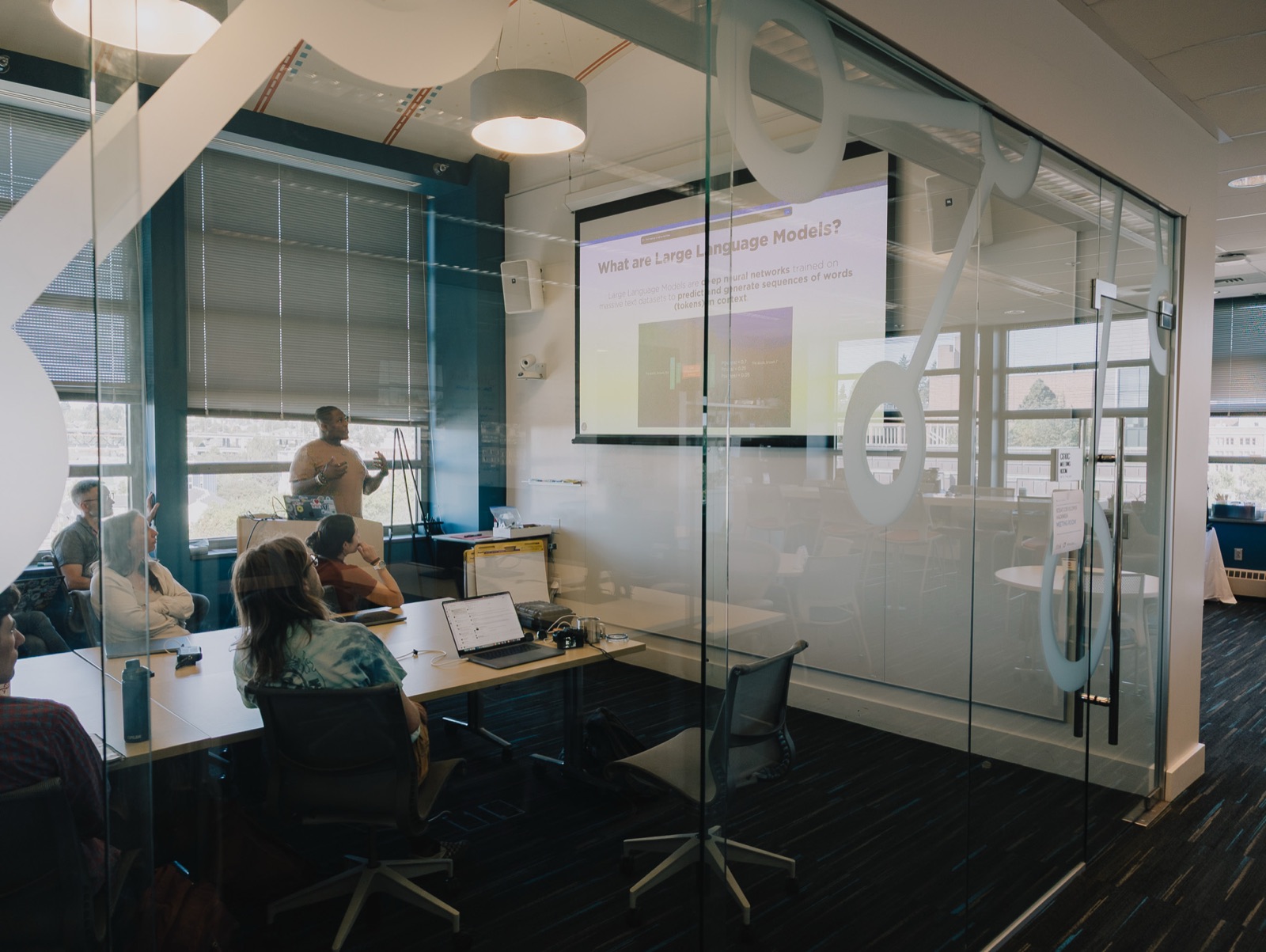
Teaching never left either; it just changed shape. A workshop on LLM fundamentals, a code review, pairing with a researcher who’s never touched the terminal. It’s the same muscle I found tutoring at UAB: meet people where they are, then walk them forward. A tool is finished when the researcher can use it without me in the room.
I won’t pretend I did any of this alone. Luck has a surface area, and you grow it where preparation meets opportunity. Some of what I’ve been given I flat-out didn’t deserve; I call that grace. The rest showed up because I’d done the work before I knew what it was for. Neither one is an excuse to skip the preparation.
The alligator wrestling became a method too. Bakers can cook; cooks can’t bake. So when I take on something new, I learn the fundamentals one level deeper than the task in front of me, whether that’s a molecular dynamics engine or an AI agent pipeline. People sometimes read that as scattered. Range is how I get to depth.
CHAPTER 04 — THE WORK
The Work
04.1 Peer-Reviewed Publications
04.2 Selected Projects
> ls work/ all projects →